

Ψάχνετε για φθηνά αεροπορικά εισιτήρια;
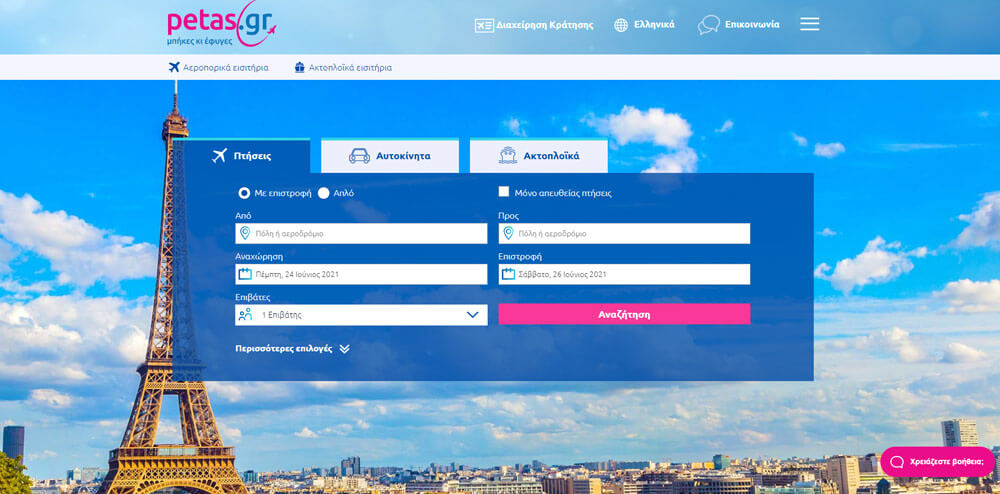
Με την υπηρεσία του airshop μπορείς εύκολα και γρήγορα να κάνεις την κράτηση σου, συμπληρώνοντας τα παραπάνω πεδία. Επιλέγετε αφετηρία και προορισμό, ημερομηνίες, αριθμό εισιτηρίων και αν επιθυμείτε να κλείσετε εισιτήρια επιστροφής. Στην συνέχεια επιλέγετε την πτήση ή τον συνδυασμό πτήσεων που σας εξυπηρετεί και είστε πανέτοιμοι για το ταξίδι σας. Μπορείτε πάντα να αλλάξετε ημερομηνίες ώστε να βρείτε πιο οικονομικές ή βολικές πτήσεις.
7 tips για τα πιο φθηνά αεροπορικά εισιτήρια
Πως θα βρεις τα πιο οικονομικά αεροπορικά εισιτήρια;
Αν μην τι άλλο, τα αεροπορικά εισιτήρια (μαζί με τη διαμονή) είναι τα πιο σημαντικά έξοδα ενός ταξιδιού. Υπάρχει όμως τρόπος να ταξιδέψεις οικονομικότερα αν ακολουθήσεις ευλαβικά τις συμβουλές μας παρακάτω:
1. Κλείσε τα εισιτήρια όσο πιο νωρίς γίνεται
Αν θέλεις να βρεις τα φθηνότερα αεροπορικά εισιτήρια θα πρέπει η κράτηση που θα κάνεις να γίνει όσο πιο νωρίς γίνεται. Είναι βέβαια σημαντικό να έχεις υπόψιν σου ότι οι αεροπορικές εταιρίες δεν βγάζουν προσφορές για πτήσεις πάρα πολύ νωρίς. Από την πολύχρονη εμπειρία μας ως γεωγραφικοί που έχουμε από τις ιστοσελίδες αεροπορικών, ο ιδανικότερος χρόνος να κλείσεις τα εισιτήρια σου είναι 2 με 4 μήνες πριν το ταξίδι. Εξαρτάται όμως τον προορισμό και την χρονική περίοδο. Βρείτε στον σύνδεσμο περισσότερα tips για το ποιες ημερομηνίες θα βρείτε φθηνά εισιτήρια.
2. Η ώρα και η ημέρα του ταξιδιού παίζει ρόλο
Αν υπάρχει δυνατότητα να ταξιδέψεις όποια μέρα θέλεις κοντά στις επιθυμητές ημερομηνίες, καλό θα ήταν ελέγξεις όσο το δυνατόν περισσότερες ημερομηνίες. Πολύ συχνά τα Σάββατα τα εισιτήρια για συγκεκριμένες πτήσεις είναι πιο φθηνά. Όπως επίσης οι πολύ βραδινές ή πρωινές ώρες που συνήθως προϋποθέτουν και επιπλέον ταλαιπωρία, είναι αρκετά πιο οικονομικές. Έχε στο νου σου ότι οι δύσκολες ώρες στα ταξίδια αυξάνουν πολύ συχνά το κόστος της διαμονής ή του φαγητού όποτε πρέπει να λάβεις και αυτά υπόψιν σου πριν επιλέξεις.
3. Επέλεξε ιστοσελίδες που συγκρίνουν τιμές από πολλές αεροπορικές εταιρίες
Η σύγκριση τιμών μπορεί να σου μειώσει αρκετά το κόστος ενός ταξιδιού ειδικά στην περίπτωση που οι διαθέσιμες πτήσεις είναι με ανταπόκριση καθώς μπορείς να συνδυάσεις πτήσεις από διαφορετικές εταιρίες. Αυτά που χρησιμοποιώ εγώ είναι το skyscanner και από ελληνικά τα airshop και petas. Κάνε κλικ στους συνδέσμους για να δεις για τι ευκολία μιλάμε. Παρολ’ αυτά αν δεν σε καλύπτουν υπάρχουν πάντα οι επίσημες ιστοσελίδες των αεροπορικών εταιριών για να κλείσεις τα εισιτήρια σου απευθείας.
Διάβασε επίσης: Τα καλύτερα σαιτ για αεροπορικά εισιτήρια για το 2023
4. Απόφυγε συγκεκριμένες περιόδους
Η εποχή που θα κάνεις το επόμενο σου ταξίδι παίζει σημαντικό ρόλο και στο κόστος των αεροπορικών εισιτηρίων αλλά και της διαμονής. Τουτέστιν απόφυγε περιόδους αιχμής όπως είναι τα Χριστούγεννα, το Πάσχα και τα καλοστημένα τριήμερα-τετραήμερα με αργίες (Καθαρά Δευτέρα, Δευτέρα του Αγίου Πνεύματος κλπ.). Πριν ταξιδέψεις σε ένα μέρος τσέκαρε αν υπάρχει κάποιο μεγάλο event που διαδραματίζεται στον προορισμό σου την ίδια περίοδο που θέλεις να πας κι εσύ. Λόγω της αυξημένης ζήτησης τα εισιτήρια εκείνη την περίοδο θα είναι πολύ πιο ακριβά. Αν έχεις λοιπόν την ευελιξία επέλεγε άλλες μέρες σε τέτοιες περιπτώσεις.
5. Οι προσφορές των αεροπορικών εισιτηρίων
Στην περίπτωση της αναζήτησης φθηνών αεροπορικών εισιτηρίων ακολουθούμε την παροιμία το γοργόν και χάριν έχει και σε καμία περίπτωση το όποιος βιάζεται σκοντάφτει. Επομένως έχοντας αυτό υπόψιν, όταν συναντήσετε κάποια προσφορά από κάποια αεροπορική εταιρία, αρπάξτε την ευκαιρία άμεσα. Ένας καλό τρόπος για να ενημερώστε για τέτοιες ευκαιρίες είναι τα newsletter των ίδιων των εταιριών όπως και επιλεγμένα ταξιδιωτικά sites. Για παράδειγμα αυτές τις μέρες τρέχει μια προσφορά 20% έκπτωση στις πτήσεις εσωτερικού και εξωτερικού της Aegean βάζοντας το κουπόνι TIMETOTRAVEL.
6. Φθηνά αεροπορικά εισιτήρια λόγω κρίσης
Η οικονομική κρίση αλλά και η πανδημία έχει φέρει τα άνω κάτω στις αεροπορικές εταιρίες και πολλές έχουν εφαρμόσει δελεαστικές εκπτώσεις. Προφανώς ΔΕΝ σου προτείνουμε να ταξιδέψεις σε μέρη που για κάποιο λόγο μπορεί να είναι επικίνδυνα για την ασφάλεια σου.
7. "Κρυμμένα" έξοδα
Όταν συγκρίνεις τιμές από διαφορετικές αεροπορικές εταιρίες να έχεις στο μυαλό σου και το κόστος των αποσκευών. Ειδικά σε πολύ φτηνά αεροπορικά εισιτήρια το κόστος τους δεν συμπεριλαμβάνεται και θα πρέπει να κάνετε τον έξτρα υπολογισμό. Μην αφήσετε τελευταία στιγμή να αγοράσεις “χώρο” για την βαλίτσα σου γιατί θα το ακριβοπληρώσεις. Φρόντισε να κάνεις τα πάντα online. Στην ίδια λογική σε προορισμούς που υπάρχουν διαθέσιμα παραπάνω από ένα αεροδρόμια, λάβε υπόψη σου το κόστος της μεταφοράς σου από το αεροδρόμιο στο κέντρο της πόλης.

Ελπίζω να βρήκες χρήσιμα τα tips μου, καλά ταξίδια εύχομαι!